
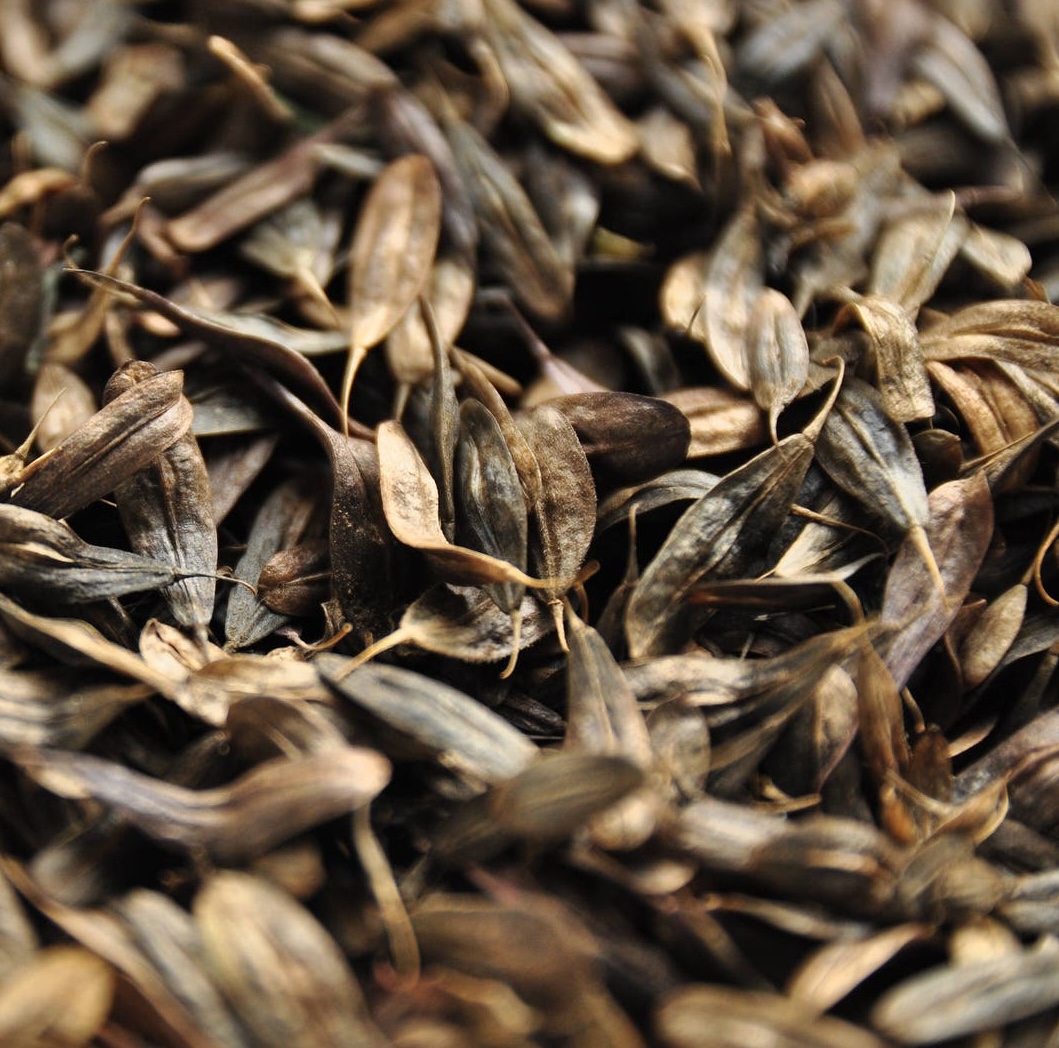
Woad seeds
lat.: Isatis tinctoria
€2.84
Woad (lat. Isatis tinctoria) is one of the oldest dye plants, and it contains precursors to blue pigment in its green leaves. The earliest archeological finds of woad seeds and drawings reached us even from the Neolithic period! Nowadays, woad is also important for historical reenactors and those who care about traditions because it was the most important source of blue color in Europe, even called the blue gold of Europe. We believe that every enthusiastic natural dyer should try to grow and harvest his own plants just to experience the magical chemistry that`s hiding in woad leaves. Additionally, it is very rewarding to create your own pigment and notice that each patch can slightly vary in colors, producing different shades of blue.
Name: Woad
Latin name: Isatis tinctoria
Other names: European Indigo, Dyer's woad, Pastel, Waide, Waad
Type: vat dye
Part of the plant used: leaves
Main colorants: indigotin, isatans
Main colors: blue
Other colors: if processed in a regular way (simmering leaves and dyeing mordanted textiles) woad can produce shades of pink, brick, beige
Purpose: natural dye for textiles, wood, leather, candles, and other natural materials. It can be used for making botanical inks, pastels, watercolors, printing paste, etc.
Additional information: please note that woad is a vat dye, which means that it is different from our usual natural dyes and has to be prepared differently, which requires specific knowledge. Leaves have to be harvested at the right time, and there are many ways to proceed from here - create woad pigment, use in a quick leaves-salt method, make woad balls or extract color, and proceed as usual with indigo pigment.
Our garden: these seeds are grown by my family in a small town in Lithuania. We do not use any chemicals and we love our plants!
Important: in some countries, there are various regulations about importing seeds so please check with your local agriculture department or other responsible institution before purchasing seeds.